
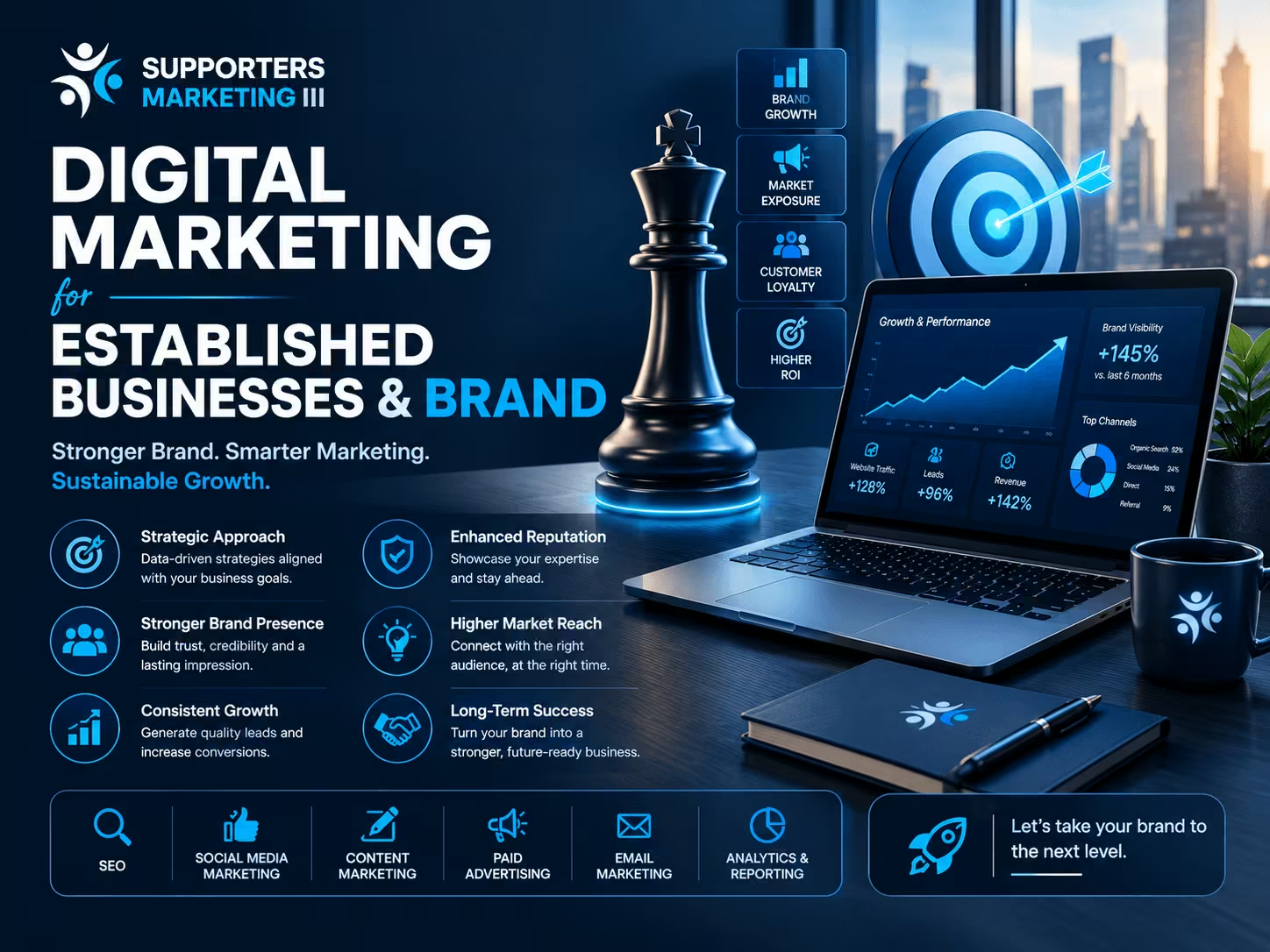
If your business has been running for years and still relies mostly on word of mouth, referrals, or a handful of long-term clients, you’re not alone. Many established businesses in Pakistan and abroad built their reputation the traditional way – and that reputation is genuinely valuable. But there’s a problem that quietly limits growth: if your business isn’t visible where your next customer is actually looking, you’re leaving revenue on the table every single day.
Digital marketing for established businesses isn’t about starting from zero. It’s about translating years of credibility, trust, and expertise into a digital presence that keeps generating leads long after the founder’s personal network has been exhausted. This guide breaks down exactly how mature businesses and known brands should approach digital marketing in 2026 – what to prioritize, what to avoid, and how to measure whether it’s actually working.
Why Established Businesses Need Digital Marketing More Than Startups Think
There’s a common misconception that digital marketing is primarily for new businesses trying to build awareness from scratch. In reality, established businesses often have more to gain, for a simple reason: they already have trust signals – testimonials, case studies, years in operation, a portfolio of real work – that startups spend years trying to build. The gap isn’t credibility. The gap is visibility.
An established manufacturing company, law firm, clinic, or retail brand may dominate its local market offline while being almost invisible on Google, completely absent from relevant search results, and inactive on the platforms where decision-makers now do their research before making contact. Meanwhile, newer, less experienced competitors with a stronger digital strategy quietly capture that search traffic and those leads.
This is the single biggest risk facing established businesses today: losing market share not because of worse products or service, but because of weaker digital discoverability.
The Core Difference: Digital Marketing for Brand vs. Digital Marketing for a New Business
Digital marketing for an established brand needs a different strategic approach than marketing for a brand-new company, and understanding this distinction matters before you spend a single rupee on ads or content.
A new business typically needs awareness first – people need to know it exists before anything else matters. An established business usually already has awareness within its existing customer base and local market. What it actually needs is:
- Expanded reach into new customer segments or geographies
- Stronger digital trust signals (Google reviews, structured data, authoritative content) that match its real-world reputation
- Conversion-focused systems that turn existing brand recognition into measurable leads and sales
- Defense of its market position against newer, digitally aggressive competitors
- A content and SEO foundation that positions it as the authority in its category, not just a participant in it
Because of this, the digital marketing plan for an established business should be built around consolidating authority and converting existing trust into online action – not chasing generic brand awareness tactics designed for startups.
Building a Digital Marketing Strategy for an Established Business
1. Start With a Digital Audit, Not Assumptions
Before recommending any tactic, a proper strategy begins with an honest audit of where the business currently stands: Google Business Profile accuracy, website performance and Core Web Vitals, existing keyword rankings, backlink profile, social media consistency, and review sentiment across platforms. Established businesses are frequently surprised to discover outdated Google listings, broken website elements, or inconsistent NAP (Name, Address, Phone) details across directories – all of which quietly erode search rankings and customer trust.
2. Search Engine Optimization Built on Topical Authority
For an established business, SEO should not revolve around one or two isolated keywords. Google’s ranking systems increasingly reward topical authority – meaning your website should comprehensively cover the full range of topics, questions, and subtopics relevant to your industry, not just a handful of high-volume terms.
Practically, this means building keyword clusters instead of single keywords. For example, rather than targeting only “digital marketing agency Islamabad,” a properly structured content plan would also build supporting content around related search intent such as SEO services in Islamabad, Google Ads management for local businesses, branding services for established companies, and website redesign for growing brands – all internally linked to reinforce topical relevance.
Alongside content, technical SEO fundamentals matter: fast page speed, mobile usability, clean site architecture, structured data (schema markup) for services, reviews, and FAQs, and a healthy backlink profile from genuinely authoritative sources. These fundamentals reflect Google’s E-E-A-T framework – Experience, Expertise, Authoritativeness, and Trustworthiness – which matters even more for established businesses because Google expects a real, credible business to demonstrate real signals of legitimacy online.
3. Local SEO and Google Business Profile Optimization
For most established businesses serving a physical location or regional market, local SEO is often the single highest-ROI digital marketing investment available. An optimized, regularly updated Google Business Profile – complete with accurate categories, service listings, high-quality photos, and a steady stream of genuine customer reviews – directly influences whether your business appears in local map results when someone nearby searches for what you offer.
A business with fifteen years of real-world reputation but a neglected Google Business Profile will consistently lose local visibility to a two-year-old competitor with an actively managed one. This is one of the most common – and most easily fixed – gaps we see among established businesses.
4. Paid Advertising: Google Ads and Meta Ads
Organic growth through SEO takes time to compound, which is exactly why paid advertising plays a complementary role. Google Ads (Search, Display, and Performance Max campaigns) allow an established business to capture high-intent demand immediately – people actively searching for the exact service or product being offered. Meta Ads (Facebook and Instagram) are more effective for building brand visibility, retargeting website visitors, and reaching audiences based on interest and behavior rather than active search intent.
For established businesses specifically, remarketing campaigns tend to perform exceptionally well. Someone who already recognizes your brand name is far more likely to convert after seeing a well-crafted retargeting ad than a completely cold audience would be. This is where existing brand trust becomes a direct performance advantage in paid media.
5. Website Experience and Conversion Rate Optimization
A strong reputation offline means little if the website fails to convert visitors once they arrive. Established businesses often operate on websites that were modern five or ten years ago but now feel outdated, load slowly, or aren’t properly optimized for mobile – despite mobile now accounting for the majority of search traffic in most industries.
A conversion-focused website should load quickly, present clear trust signals (reviews, certifications, case studies, years in business), guide visitors toward a specific action through clear calls-to-action, and be built on an SEO-friendly architecture that supports long-term organic growth rather than working against it.
6. Content Marketing That Reinforces Authority
Content marketing for an established brand should demonstrate depth of expertise, not just publish generic blog posts for the sake of posting. Well-researched articles, service-specific guides, case studies, and FAQ-driven content all serve a dual purpose: they answer real questions your potential customers are searching for, and they signal to Google that your website is a genuine authority in its space – which supports rankings across your entire site, not just individual pages.
7. Reputation Management
For established businesses, reputation is often the most valuable digital asset available, yet it’s frequently the most neglected. A consistent system for requesting, monitoring, and responding to reviews across Google, Facebook, and industry-specific platforms directly influences both search rankings and customer decision-making. Studies on consumer behavior consistently show that potential customers weigh recent reviews heavily when choosing between similar businesses – and an established business with dozens of untouched or unanswered reviews is quietly losing trust it has actually earned.
Common Mistakes Established Businesses Make in Digital Marketing
Many established businesses approach digital marketing reactively rather than strategically, and a few mistakes show up repeatedly:
Treating digital marketing as a short-term campaign rather than an ongoing system undermines long-term SEO gains, since search rankings compound over months, not weeks. Ignoring Google Business Profile and local SEO in favor of only running paid ads leaves significant organic opportunity untapped. Redesigning a website purely for aesthetics without considering SEO architecture or page speed can actually hurt rankings that took years to build. Running social media inconsistently, in bursts, rather than maintaining a steady publishing rhythm, confuses algorithms and audiences alike. Finally, failing to track KPIs beyond vanity metrics like follower counts means decisions get made without real visibility into what’s actually driving revenue.
Key Performance Indicators to Track
To ensure digital marketing efforts translate into real business outcomes, established businesses should track organic keyword rankings and search visibility, website traffic segmented by source, Google Business Profile views and direction requests, lead form submissions and call tracking, cost per lead and return on ad spend for paid campaigns, and conversion rate across key landing pages. Vanity metrics like impressions or follower growth matter far less than metrics tied directly to leads, sales, and revenue.
Recommended Tools for Ongoing Management
Google Search Console and Google Analytics 4 remain essential for tracking organic performance and user behavior. Google Business Profile Manager is critical for local SEO oversight. Tools like Google Keyword Planner and Ahrefs or Semrush support keyword research and competitor analysis, while Meta Business Suite and Google Ads Manager handle paid campaign execution and optimization.
Key Takeaways
Established businesses already possess the hardest asset to build – real-world trust and credibility. Digital marketing’s role is to translate that trust into online visibility, qualified leads, and measurable revenue growth. The strategy should prioritize topical SEO authority, accurate and active local listings, a conversion-optimized website, targeted paid advertising, consistent content, and disciplined reputation management – all measured against real business KPIs rather than vanity metrics.
Frequently Asked Questions
Why does an established business need digital marketing if it already has a loyal customer base?
A loyal customer base sustains current revenue but doesn’t generate new growth on its own. Digital marketing opens access to new customer segments, geographies, and search intent that your existing network doesn’t reach, ensuring the business keeps growing instead of plateauing.
How is digital marketing for established businesses different from marketing a startup?
Startups typically need to build awareness from zero. Established businesses usually already have credibility and need to focus on visibility, conversion, and defending market share against newer, digitally aggressive competitors.
Which digital marketing channel should an established business prioritize first?
For most local or regional businesses, Google Business Profile optimization and local SEO deliver the fastest, most cost-effective results, since they capture high-intent customers who are already searching for the exact service offered.
How long does it take to see results from SEO for an established business?
Meaningful organic ranking improvements typically take three to six months, depending on competition and website starting condition, though established businesses with existing domain trust often see faster movement than brand-new websites.
Is paid advertising still necessary if a business already has strong SEO?
Yes. SEO builds long-term, compounding visibility, while paid advertising like Google Ads and Meta Ads captures immediate demand and supports remarketing to visitors who haven’t converted yet. The two work best together, not as substitutes for one another.
Conclusion
Digital marketing for established businesses isn’t about reinventing your brand – it’s about giving your existing credibility the visibility it deserves in the places your future customers are actually searching. A structured approach built on local SEO, topical authority, a conversion-ready website, targeted paid campaigns, and consistent reputation management turns years of hard-earned trust into a predictable, measurable growth engine.
If your business is ready to close the gap between offline reputation and online visibility, Supporters Marketing, a digital marketing agency based in Islamabad and Rawalpindi, works with established businesses and brands to build exactly this kind of strategy – grounded in real data, white-hat SEO, and measurable outcomes. Get in touch to start with a digital audit of where your business currently stands.

 Chat on WhatsApp